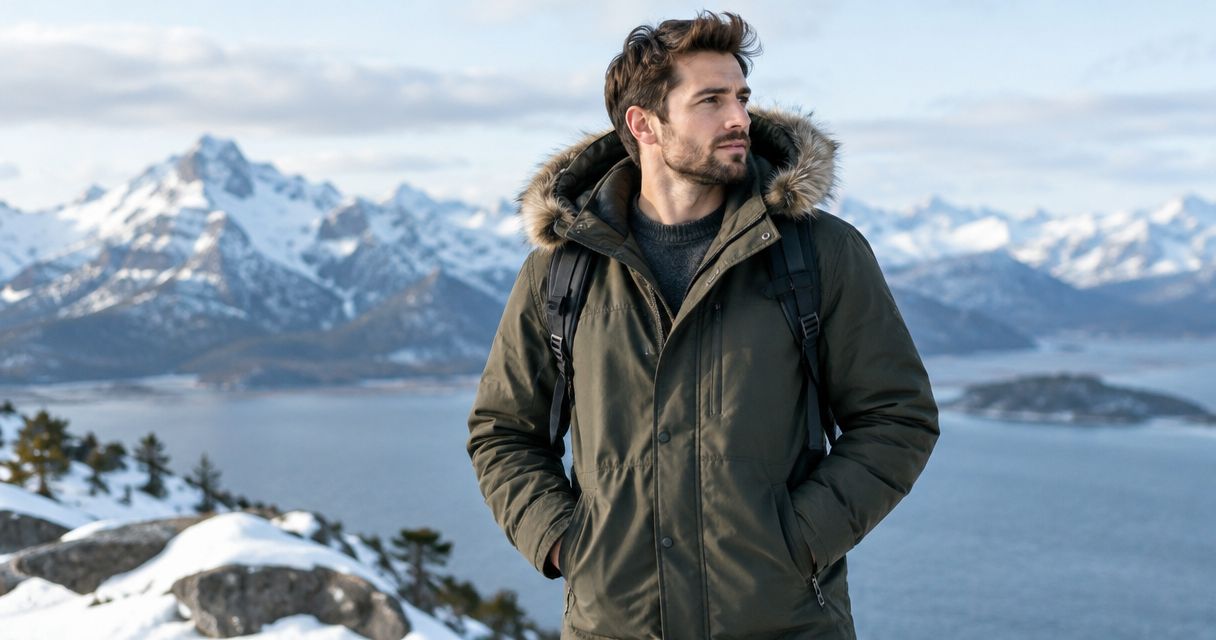
Best overall: a synthetic insulated hooded jacket. Best for wet weather: a waterproof insulated jacket. Best budget approach: keep a serviceable shell and add an insulating layer. The best men's winter jackets deals in 2026 match your weather, daily routine, and layering needs—not just a discount label.
- For men's winter jackets deals, choose synthetic insulation for everyday wear and waterproof construction for wet weather.
- Down puffers suit dry-weather travel; long insulated parkas suit cold outings with little movement.
- Shoplikeamazon suits everyday shoppers browsing discounted general merchandise; choose winter jackets by weather protection first.
- Check garment measurements, insulation details, and care instructions before choosing a winter coat.
Why this matters
A warm jacket and a suitable jacket are not always the same thing. A bulky coat becomes uncomfortable during a brisk walk; a lightweight puffer leaves gaps when you stand outside in wind. Rain adds another requirement: keeping water out, not simply adding insulation.
Shoplikeamazon is a discounted general-merchandise marketplace. When comparing men's winter jackets deals there, treat the product description as your decision sheet: identify the jacket's construction before judging the offer.
For your 2026 shortlist, start with the situation you face most often. Buy for your normal winter day, then account for occasional extremes with layers.
What makes the best men's winter jacket?
Use these criteria before comparing styles. They explain the ranking below and keep an attractive listing from becoming the wrong purchase.
- Weather protection: Separate water-resistant fabric from waterproof construction. For sustained rain, look for explicit waterproofing and sealed-seam information.
- Insulation: Identify down, synthetic fill, or an uninsulated shell. A puffy appearance does not establish warmth.
- Coverage: Check the hood, collar, cuffs, and hem. Open gaps let cold air reach your layers.
- Layering room: Allow space for the clothes you actually wear without pulling the shoulders or compressing insulation.
- Movement: Match the cut to walking, driving, commuting, or standing outside. More coverage creates different movement demands.
- Care requirements: Read cleaning and drying instructions. Choose a garment you can maintain correctly.
Men's winter jackets deals at a glance
These are ranked jacket types, not named products. Use the table to identify the construction that fits your routine, then check the individual listing for evidence.
| Rank and jacket type | Best for | Standout feature | Key limitation |
|---|---|---|---|
| 1. Synthetic insulated hooded jacket | Everyday mixed-weather errands | Insulation with adjustable head coverage | Water resistance is not waterproofing |
| 2. Down puffer | Dry-weather travel | Compressible insulation | Ordinary down loses insulating performance when wet |
| 3. Waterproof insulated jacket | Rainy winter commutes | Weather barrier and insulation together | Fixed insulation limits layering flexibility |
| 4. Long insulated parka | Cold outings with little movement | Extra coverage below the waist | Length and bulk restrict movement |
| 5. Wool-blend coat | Smart urban commuting | Tailored shape over everyday clothes | Wool content and lining vary |
| 6. Uninsulated shell | Active outings with changing effort | Weather protection separated from warmth | Needs an insulating layer for cold conditions |
1. Synthetic insulated hooded jacket: best for everyday errands
A synthetic insulated hooded jacket is the default choice for a routine built around short walks, errands, and getting in and out of vehicles. It combines an insulating layer with head coverage without requiring a separate shell-and-midlayer setup.
Synthetic insulation generally handles damp conditions better than ordinary down. That does not make the outer fabric waterproof: check the listing separately for rain protection.
Synthetic insulated hooded jacket pros:
- Combines insulation and hood coverage in one garment.
- Suits routines that alternate between outdoors and sheltered spaces.
- Provides an alternative to down for shoppers who prefer synthetic fill.
Synthetic insulated hooded jacket cons:
- Warmth depends on the actual insulation and construction.
- A water-resistant version is not the right substitute for a rain jacket.
Best for: Everyday shoppers who want a straightforward winter jacket rather than a specialized outdoor system.
For a 2026 purchase, prioritize an adjustable hood, secure cuffs, and room for your usual sweater. Pocket placement matters too: check whether you can reach the pockets comfortably while wearing gloves.
Verdict: Buy a synthetic insulated hooded jacket for everyday use when its weather protection matches your conditions.
2. Down puffer: best for dry-weather travel
A down puffer uses down insulation held within stitched compartments. Its main appeal is compressible warmth, making it useful when you carry a jacket between indoor spaces, transport, and outdoor stops.
Choose a down puffer for predominantly dry conditions. Ordinary down loses loft when wet, so wet-weather use requires suitable protection rather than confidence in the jacket's thickness.
Down puffer pros:
- Compresses for packing and carrying.
- Provides insulation without the structure of a tailored coat.
- Works as an insulating layer beneath a roomy shell.
Down puffer cons:
- Ordinary down performs poorly when thoroughly wet.
- Cleaning and drying require attention to the garment's instructions.
Best for: Travelers who prioritize packability and face mainly dry winter weather.
Check both the outer fabric and the insulation description. Fill power describes down loft, not the complete jacket's warmth; fill quantity, coverage, and construction also matter. Do not rank two puffers using fill power alone.
Verdict: Buy a down puffer for dry-weather travel; skip it as your only protection against sustained rain.
3. Waterproof insulated jacket: best for rainy commutes
A waterproof insulated jacket combines an insulating layer with an outer construction designed to keep water out. It suits winter routines where rain and cold arrive together and you want a single outer garment.
Look for explicit waterproof construction and sealed-seam details. A listing that says only water-resistant has not established the same protection.
Waterproof insulated jacket pros:
- Combines rain protection and insulation.
- Reduces the need to manage separate outer layers.
- Suits exposed walks between transport, work, and home.
Waterproof insulated jacket cons:
- You cannot remove built-in insulation when activity increases.
- Waterproof construction still needs appropriate care.
Best for: Commuters whose main problem is cold rain rather than dry cold.
For 2026 shopping, check hood adjustment before pocket count. A hood that blocks your view or leaves your face exposed undermines an otherwise suitable jacket. Ventilation features also deserve attention if your commute includes a brisk walk.
Verdict: Buy a waterproof insulated jacket for rainy winter commutes when the listing confirms its waterproof construction.
4. Long insulated parka: best for standing outside
A long insulated parka adds coverage below the waist. That makes it a sensible option for waiting outdoors, watching an event, or handling winter tasks that involve little movement.
Length is its distinguishing feature—not proof of a particular temperature rating. Check the insulation, closure, hood, and fit instead of assuming every parka delivers the same warmth.
Long insulated parka pros:
- Covers more of your body than a waist-length jacket.
- Suits low-activity outdoor routines.
- Offers room for layers when the cut allows it.
Long insulated parka cons:
- Longer hems can interfere with sitting and taking large steps.
- Bulk makes packing and carrying less convenient.
Best for: Shoppers who spend their coldest outdoor time standing or waiting.
Check whether the closure opens from the bottom or the hem has another movement allowance. Then assess how the jacket fits while seated. A coat that feels comfortable standing can pull across your lap in a vehicle.
Verdict: Buy a long insulated parka for low-movement cold exposure; skip the extra length if it obstructs your daily routine.
5. Wool-blend coat: best for smart urban commuting
A wool-blend coat puts a tailored silhouette ahead of outdoor-jacket styling. It works over office clothes when your winter routine includes short outdoor stretches and you want a coat that fits a smarter outfit.
Read the fabric composition rather than relying on the word wool. Blend composition, fabric weight, lining, and cut all influence how the garment wears.
Wool-blend coat pros:
- Pairs naturally with tailored trousers and office clothes.
- Provides an alternative to a quilted or technical appearance.
- Accommodates a blazer when the shoulder and chest fit allow it.
Wool-blend coat cons:
- It is not a substitute for confirmed waterproof outerwear.
- Cleaning requirements can be less convenient than those of washable jackets.
Best for: Office commuters who prioritize a tailored look during short outdoor journeys.
Try the coat over the outfit you intend to wear, not just a thin shirt. Button it, reach forward, and check the shoulders. A tailored appearance should not require restricted movement.
Verdict: Buy a wool-blend coat for smart commuting; skip it as your sole coat for prolonged wet-weather exposure.
6. Uninsulated shell: best for active winter outings
An uninsulated shell separates weather protection from warmth. You add an insulating layer underneath and adjust that layer to suit your activity and conditions.
This is a system rather than a complete cold-weather jacket. It suits walking and other active outings where your effort changes and fixed insulation becomes inconvenient.
Uninsulated shell pros:
- Lets you change insulation without changing the outer garment.
- Works across different conditions with suitable layers.
- Keeps the weather barrier separate from the insulating layer.
Uninsulated shell cons:
- Provides no substantial insulating layer by itself.
- Requires enough room to fit your chosen midlayer.
Best for: Active shoppers who want control over their layering.
Check the shell's protection claims, hood, and ventilation. If you already own a serviceable shell, assess its fit and condition before replacing it. Adding suitable insulation is the budget approach here, not evidence that a particular jacket costs less.
Verdict: Buy an uninsulated shell for flexible layering; skip it as a standalone winter-warmth solution.
How the jacket types are ranked
The ranking prioritizes everyday usefulness, then separates specialized needs: dry-weather travel, rain, low activity, office wear, and active layering. It compares construction and intended use, not measured performance from product testing.
For men's winter jackets deals at Shoplikeamazon, use that order as a starting point—not a reason to ignore your weather. A rainy commute moves waterproof construction ahead of packability. Long periods standing outside move coverage ahead of easy carrying.
Which winter jacket should you choose?
Choose a synthetic insulated hooded jacket if you are undecided and need everyday outerwear. Change that default only when your routine presents a clearer requirement.
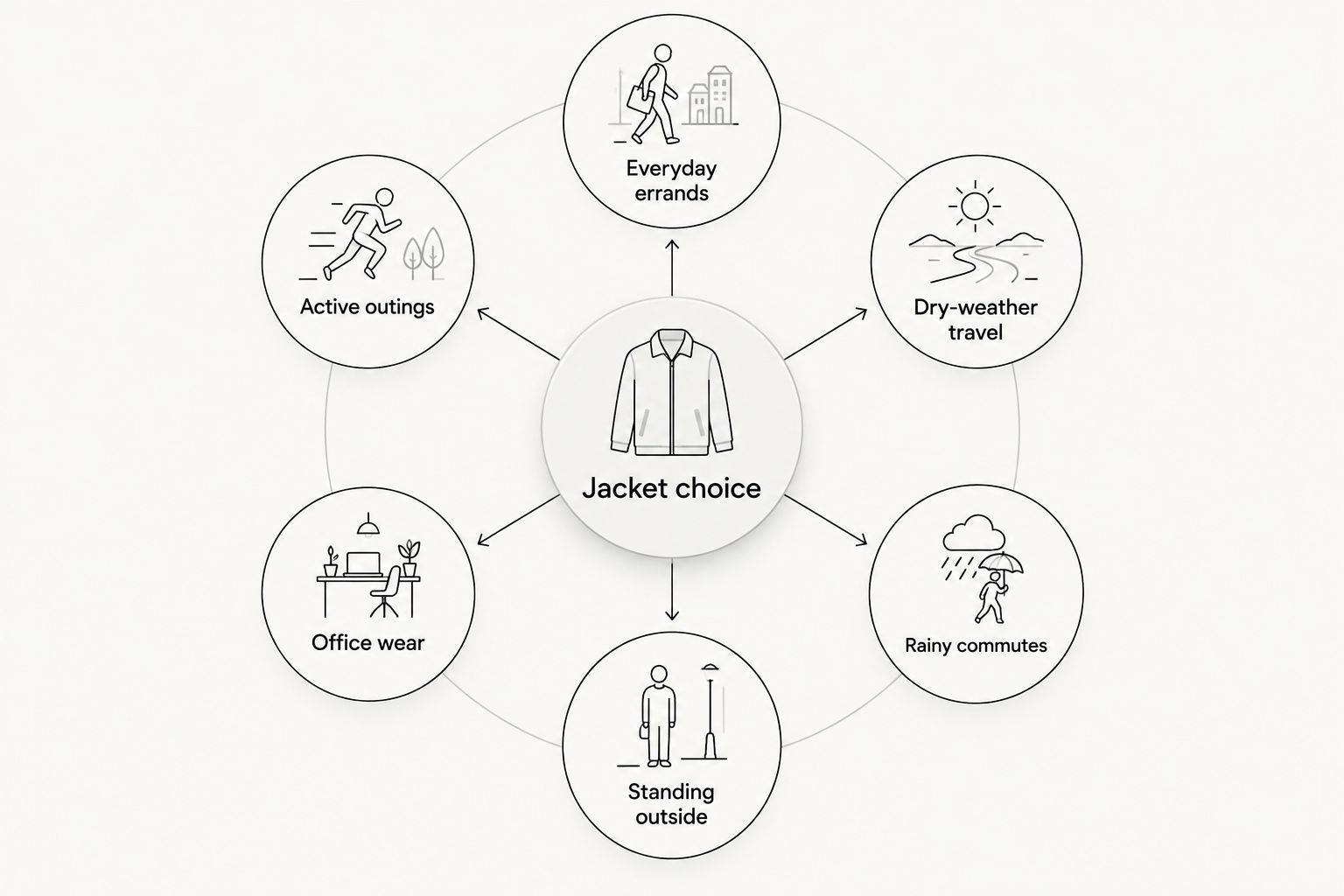
- Everyday errands: Start with the synthetic insulated hooded jacket.
- Dry-weather travel: Start with the down puffer.
- Rainy commutes: Start with the waterproof insulated jacket.
- Standing outside: Start with the long insulated parka.
- Office wear: Start with the wool-blend coat.
- Active outings: Start with the uninsulated shell and separate insulation.
Your 2026 shortlist should reflect the route you actually take. A short walk from a vehicle to a building demands a different compromise from a commute spent outside in rain. Do not buy the most substantial-looking coat automatically.
Check the fit before committing
Use 3 fit checks to assess any winter jacket. Follow the seller's garment measurements and measuring instructions rather than assuming your usual size transfers between cuts.
- Layer check: Assess the fit over your intended sweater or midlayer. The closure should sit comfortably without flattening the insulating layer.
- Movement check: Perform 2 arm movements: reach forward and raise your arms. Check for shoulder pulling, cuff retreat, and a hem that rides up excessively.
- Seated check: Sit down and bend your knees. Check pressure across the lap, chest, and collar.
For a layered system, assess 2 garments together: the insulating layer and the shell. Each garment fitting separately does not establish that the combination fits.
Before choosing men's winter jackets deals at Shoplikeamazon, also read the care instructions and distinguish features from vague adjectives. Warm, premium, and winter-ready are not substitutes for an insulation description or a waterproofing claim.
Compare deals with your checklist
Match the listing's construction, garment measurements, and care requirements to your winter routine.
FAQ
What's the best type of men's winter jacket for everyday use?
A synthetic insulated hooded jacket is the default recommendation for everyday errands. Check its insulation, fit, and weather protection; synthetic fill does not make the outer fabric waterproof.
Is a down jacket better than a synthetic jacket?
Down suits dry-weather travel and packability, while synthetic insulation generally handles damp conditions better. The complete jacket's construction and your weather determine which choice fits your routine.
Is a water-resistant winter jacket waterproof?
No, water-resistant and waterproof are different claims. For sustained rain, look for explicit waterproof construction and sealed-seam information rather than treating water resistance as equivalent.
How do I find men's winter jackets deals in 2026?
Compare jackets with the same intended use and confirmed features before judging a deal. Check insulation, weather protection, garment measurements, and care requirements so an attractive offer does not lead to the wrong coat.
Should I size up when buying a winter jacket?
Do not size up automatically; use the seller's garment measurements and assess the fit over your intended layers. Check shoulder movement, closure comfort, and seated fit before choosing a size.
Is a long parka better than a short winter jacket?
A long parka is the better choice when extra coverage matters during low-movement outdoor time. A shorter jacket suits routines where sitting, walking freely, and carrying less bulk take priority.
Can I use a rain shell as a winter jacket?
A rain shell works as the outer layer of a winter clothing system, but an uninsulated shell does not supply substantial warmth by itself. Add suitable insulation underneath and check that both garments fit together.
Does a higher down fill power mean a warmer jacket?
Higher fill power describes greater down loft, not the complete jacket's warmth. Fill quantity, garment coverage, and construction also affect insulation, so fill power alone is not enough to compare jackets.
One last thing
Check the gaps before chasing thicker insulation. A hood that will not adjust, loose cuffs, or a hem that rises when you reach can undermine an otherwise sensible choice.
For your 2026 purchase, make the final decision while picturing a normal winter outing: your clothes underneath, your hands reaching forward, and your body seated. The best deal is the jacket that fits that routine—not the one with the loudest label.