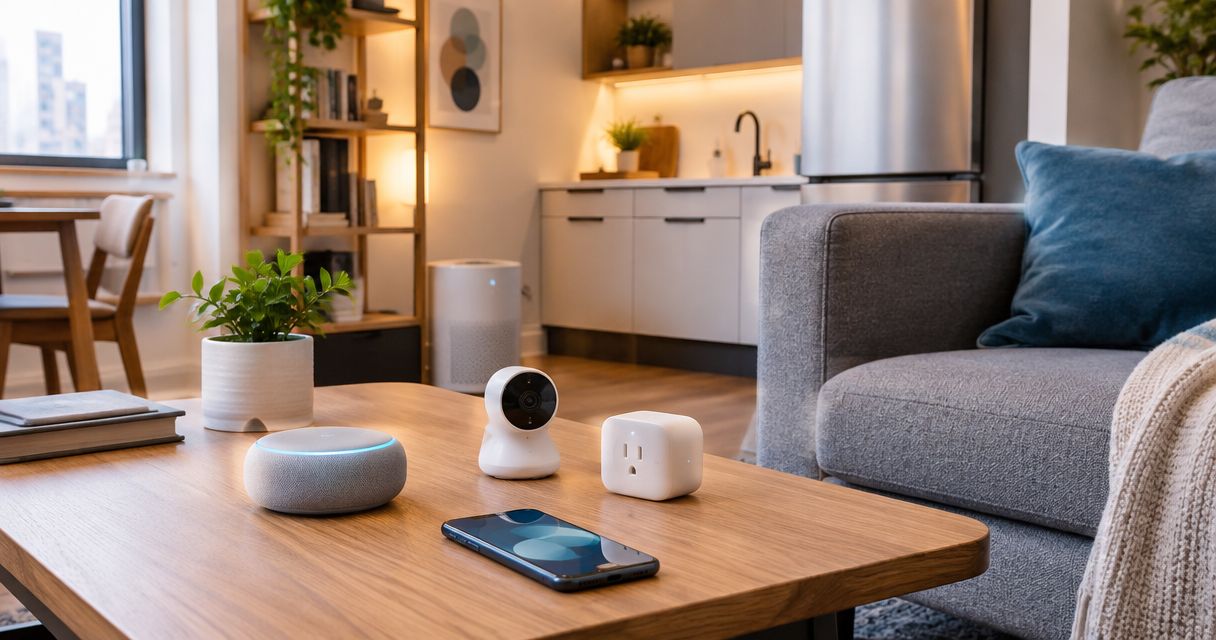
Best overall: a smart plug for an existing lamp. Best for adjustable lighting: a smart bulb. Best for hands-free routines: a smart speaker. The best smart home devices for small apartments in 2026 solve a daily problem without taking over your outlets, counters, or rental fixtures.
- Start with a smart plug when choosing smart home devices for small apartments; it automates a compatible existing lamp.
- Choose smart bulbs for adjustable light and contact sensors for door or window alerts.
- Shoplikeamazon suits discounted-tech shoppers; choose smart home devices by compatibility, placement, and installation requirements.
- Skip permanent installations when your lease or landlord does not permit changes.
Why this matters
A small apartment does not need a device in every corner. You need useful control over the things you already use: a bedside lamp, your main room's lighting, or an alert when water reaches the floor beneath a sink.
Shoplikeamazon is a marketplace for discounted tech shoppers comparing smart home devices for small apartments. Browse Shoplikeamazon with a specific job in mind, then check the individual listing rather than treating every connected gadget as an upgrade.
This 2026 guide ranks device types, not individual models. The recommendation changes with your apartment: a plug helps with an existing lamp, while a bulb changes the light itself. A device that requires wiring, a subscription, or another hub needs a stronger reason to earn its place.
What makes the best apartment smart home device?
Use these criteria before choosing a category. A feature only matters if you can use it in your actual room.
- Useful control: Pick a recurring task, such as switching a lamp off from bed, rather than buying connectivity for its own sake.
- Rental fit: Prefer removable hardware. Get permission before changing wiring, locks, or permanently mounted fixtures.
- Network fit: Confirm the device's supported connection method. A Wi-Fi device, a hub-connected sensor, and a Bluetooth accessory have different requirements.
- Physical fit: Check outlet clearance, bulb bases, charging-dock space, and whether a sensor can sit where it needs to detect a problem.
- Daily usability: Look for a workable manual control. Guests and housemates should not need your phone to turn on a light.
- Ongoing obligations: Read account, subscription, privacy, and support requirements before you commit to an ecosystem.
For Wi-Fi products, distinguish 2.4 GHz support from 5 GHz support. Those are separate frequency bands, not interchangeable compatibility labels. Check both the device requirements and the network you are allowed to configure.
Smart home devices at a glance
The order below prioritizes everyday use, removable installation, and a small physical footprint. It is a buying sequence, not a claim that every apartment needs every category.
| Rank and device | Best for | Standout function | Key limitation |
|---|---|---|---|
| 1. Smart plug | Automating an existing lamp | Adds remote switching without replacing the lamp | Cannot add dimming to a basic lamp |
| 2. Smart bulb | Adjustable room lighting | Changes brightness; some models also change color temperature | Needs power at the wall switch |
| 3. Smart speaker | Hands-free control | Gives compatible devices a voice-control interface | Adds a microphone and ecosystem requirements |
| 4. Contact sensor | Door and window alerts | Detects when two sensor parts separate | Needs suitable placement and an alert connection |
| 5. Water leak sensor | Spotting water near plumbing | Detects water where the sensor is positioned | Does not stop a leak by itself |
| 6. Robot vacuum | Automating routine floor cleaning | Cleans accessible floor areas on a schedule | Needs dock space and a navigable floor |
1. Smart plug: best for an existing lamp
A smart plug switches power to a compatible connected appliance. For a small apartment, a lamp is a straightforward use: you keep the lamp you like and add remote on/off control or a schedule.
Choose a lamp that resumes working when power returns. A lamp with an electronic control that stays off after power is restored defeats the purpose of switching its outlet remotely.
Smart plug pros:
- Reuses an existing lamp instead of replacing it.
- Installs without altering apartment wiring.
- Can support schedules when the chosen model provides them.
- Moves with you when you leave the apartment.
Smart plug cons:
- A basic switching plug does not dim the lamp.
- A bulky casing can obstruct an adjacent outlet.
- Electrical load limits restrict what you can connect.
US household outlets commonly supply 120 V power. Match the plug's voltage and load rating to the connected device; voltage alone does not establish compatibility. Do not use a smart plug to bypass an appliance manufacturer's safety instructions.
Best for: Renters who want to control an existing lamp from bed or the sofa.
Verdict: Buy a compatible smart plug for a clear switching task; skip it when you actually need adjustable brightness.
2. Smart bulb: best for adjustable room lighting
A smart bulb puts connected control inside the light source. Dimmable models adjust brightness, while models with tunable white light let you change color temperature; check the listing for the functions you want.
In a studio apartment, adjustable light helps one room serve different activities. You can use brighter light for cleaning and lower light for winding down without adding another lamp to the floor.
Smart bulb pros:
- Adds lighting control without another countertop device.
- Fits an existing fixture when the base and dimensions match.
- Offers brightness adjustment on compatible models.
- Supports lighting routines when the selected system allows them.
Smart bulb cons:
- Turning off the wall switch removes power and connected control.
- Enclosed fixtures and existing dimmers require compatibility checks.
- Multiple bulbs introduce more devices to configure.
Check the bulb base, fixture restrictions, and switch arrangement before buying. Brightness control is useful only if the bulb works safely in the fixture and everyone understands how to operate it.
Best for: Apartments where one room needs different lighting settings throughout the day.
Verdict: Buy a compatible smart bulb for lighting control; skip color features if you only want dimming.
3. Smart speaker: best for hands-free routines
A smart speaker provides voice commands for compatible connected devices. It can also serve as a timer or audio device, depending on the model and supported services.
The apartment benefit is hands-free control, not another screen. A speaker earns its place when you regularly want to change lights or run a routine while cooking, carrying something, or settling into bed.
Smart speaker pros:
- Controls compatible devices without opening an app.
- Can group supported actions into a voice-triggered routine.
- Offers shared control without handing someone your phone.
- Combines voice control with audio functions.
Smart speaker cons:
- Introduces a microphone into your living space.
- Compatibility depends on the speaker's platform and each accessory.
- Voice commands can disturb a sleeping housemate in a shared room.
For a 2026 setup, confirm the specific devices and actions the speaker supports. A familiar platform name on the packaging does not establish that every feature works through voice control.
Read the microphone controls, recording settings, and account requirements before deciding where the speaker belongs.
Best for: People who will use voice control regularly and are comfortable with the privacy settings.
Verdict: Buy for frequent hands-free use; skip it if app or physical controls already meet your needs.
4. Contact sensor: best for door and window alerts
A contact sensor detects separation between its sensor and magnet. Mounted correctly, it can report that a door or window has opened and trigger a supported notification or routine.
This is status information, not a replacement for a lock. In an apartment, its value is knowing whether a particular opening changed state, rather than installing a larger security system without a clear need.
Contact sensor pros:
- Takes little space on a suitable door or window frame.
- Can support an opening alert without a camera.
- Provides a trigger for compatible automations.
Contact sensor cons:
- Some models require a separate hub or bridge.
- Alignment and mounting surfaces affect installation.
- It cannot physically secure the door or window.
Check the permitted mounting method and the gap between the sensor parts. Removable adhesive still deserves caution: removing it can damage paint or finishes, so follow the mounting instructions and rental rules.
Confirm how notifications reach your phone and what happens when the connection is unavailable. An opening sensor is only useful if its alert path meets your needs.
Best for: Renters who want status alerts for a specific door or window.
Verdict: Buy for a defined alert; skip it if you expect the sensor itself to prevent entry.
5. Water leak sensor: best for plumbing-area alerts
A water leak sensor detects water at its sensing contacts or along a supported sensing cable. Place it where escaping water would reach it, such as beneath a sink, following the product's installation instructions.
Unlike a lighting device, this category addresses a problem you hope never occurs. The practical benefit is an alert that prompts you to check the area and contact building maintenance when necessary.
Water leak sensor pros:
- Can monitor an out-of-sight area without a camera.
- Requires little floor or cabinet space.
- Can provide a local alarm or connected notification, depending on the model.
Water leak sensor cons:
- Detects water only where its sensing components reach.
- Battery-powered models need battery checks.
- A standalone sensor does not shut off the water supply.
Placement matters more than a long feature list. A sensor positioned away from the path of a leak will not detect water somewhere else in the cabinet.
Use the manufacturer's recommended test method, and make sure you know who handles building emergencies. Keep that contact information somewhere you can access without relying on the sensor's app.
Best for: Apartments with an accessible plumbing area you want to monitor.
Verdict: Buy for a specific detection location; skip claims that an alert sensor alone prevents water damage.
6. Robot vacuum: best for routine floor cleaning
A robot vacuum cleans floor areas it can reach and traverse. Scheduling and app control vary by model, so choose cleaning capability first and connected features second.
A small apartment is not automatically an easy robot-vacuum layout. Chair legs, loose cables, rugs, thresholds, and the charging dock all affect whether the machine has a workable route.
Robot vacuum pros:
- Automates a recurring cleaning task.
- Can clean accessible areas while you handle something else.
- Supports scheduled cleaning on models with that function.
Robot vacuum cons:
- The dock occupies floor space and needs suitable clearance.
- Loose objects and cables require preparation.
- Bins, brushes, and filters still need maintenance.
Check the manufacturer's dock-clearance instructions against your actual floor plan. Do not reserve a location that blocks a walkway just to accommodate the machine.
For a 2026 purchase, focus on floor compatibility, obstacle handling, and maintenance access rather than treating app control as proof of cleaning quality.
Best for: Apartments with accessible floors and a permanent, unobstructed dock location.
Verdict: Buy when your layout supports it; skip it when preparing the floor creates more work than cleaning it yourself.
How the ranking works
Smart plugs and bulbs lead because they address common lighting tasks without permanent installation. Speakers follow when hands-free control is useful. Sensors solve narrower alert needs, while robot vacuums require the strongest fit with your floor plan.
This ranking uses installation, space, compatibility, and daily usefulness—not model-specific performance testing. Treat it as a category shortlist, then examine the requirements of the actual device.
Which device should you choose?
Start with a smart plug for an existing lamp unless adjustable lighting is your main goal. In that case, choose a compatible smart bulb instead. Add another category only after you can name the problem it solves.
Use this short sequence for your 2026 apartment setup:
- Pick the task: Name the action or alert you want.
- Check compatibility: Verify the fixture, appliance, network, and controller requirements.
- Check placement: Find a usable outlet, mounting surface, or dock location.
- Test controls: Confirm that everyday operation works for everyone in the apartment.
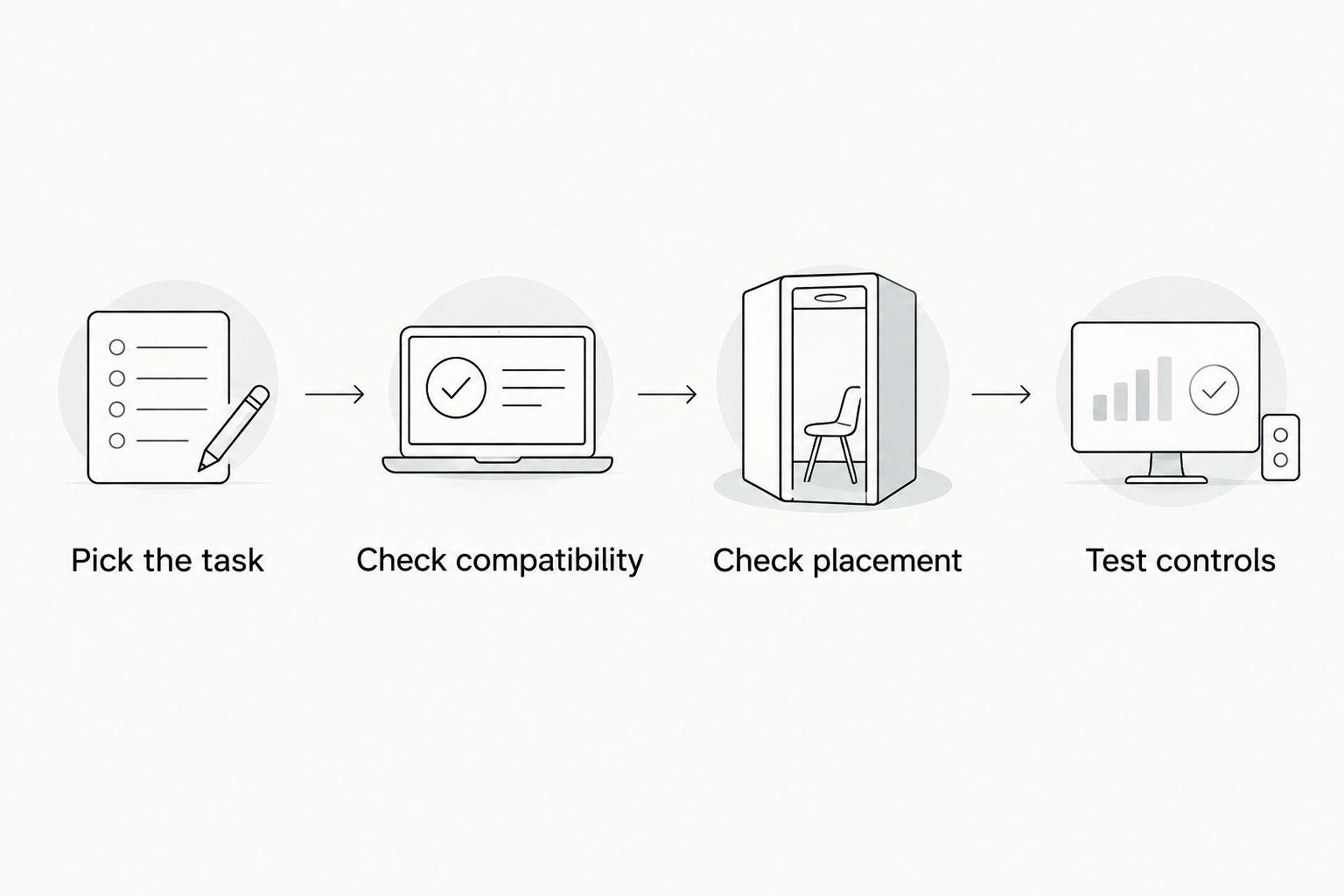
When comparing smart home devices for small apartments through Shoplikeamazon, keep that sequence beside the listing. A useful purchase meets the requirements of your room; a feature list alone does not.
FAQ
What's the best smart home device for a small apartment?
A smart plug is the best starting point for controlling a compatible existing lamp. Choose a smart bulb instead when you need adjustable brightness or supported color-temperature settings.
Are smart plugs better than smart bulbs?
Smart plugs are better for switching an existing lamp on and off; smart bulbs are better for adjusting the light itself. A basic switching plug cannot add dimming to a lamp.
Do I need a smart speaker for apartment automation?
You do not need a smart speaker if your chosen devices support the controls and schedules you want without one. Buy a speaker when hands-free control is a feature you will actually use.
Can renters install smart home devices?
Renters can choose removable devices, but installation must follow their lease and building rules. Get permission before altering wiring, locks, or permanently mounted fixtures.
Will a smart device work with my apartment Wi-Fi?
It works only if your network meets the device's stated requirements. Check supported frequency bands, account requirements, and whether shared building Wi-Fi permits the connection process.
Can a water leak sensor stop a leak?
A standalone water leak sensor detects water and provides its supported alert; it does not stop the leak. Automatic shutoff requires separate compatible equipment and an appropriate installation.
Is a robot vacuum worth it in a studio apartment?
A robot vacuum is useful when your studio has accessible floors and a suitable charging-dock location. Skip it when clutter, obstacles, or dock placement make routine operation impractical.
One last thing
The smartest lighting setup still needs an ordinary way to turn on the light. Before adding routines, test what happens when someone uses the wall switch and when the network is unavailable.
Keep everyday controls simple. Use Shoplikeamazon to compare a device for a defined job, not to fill your apartment with gadgets that all need attention.